
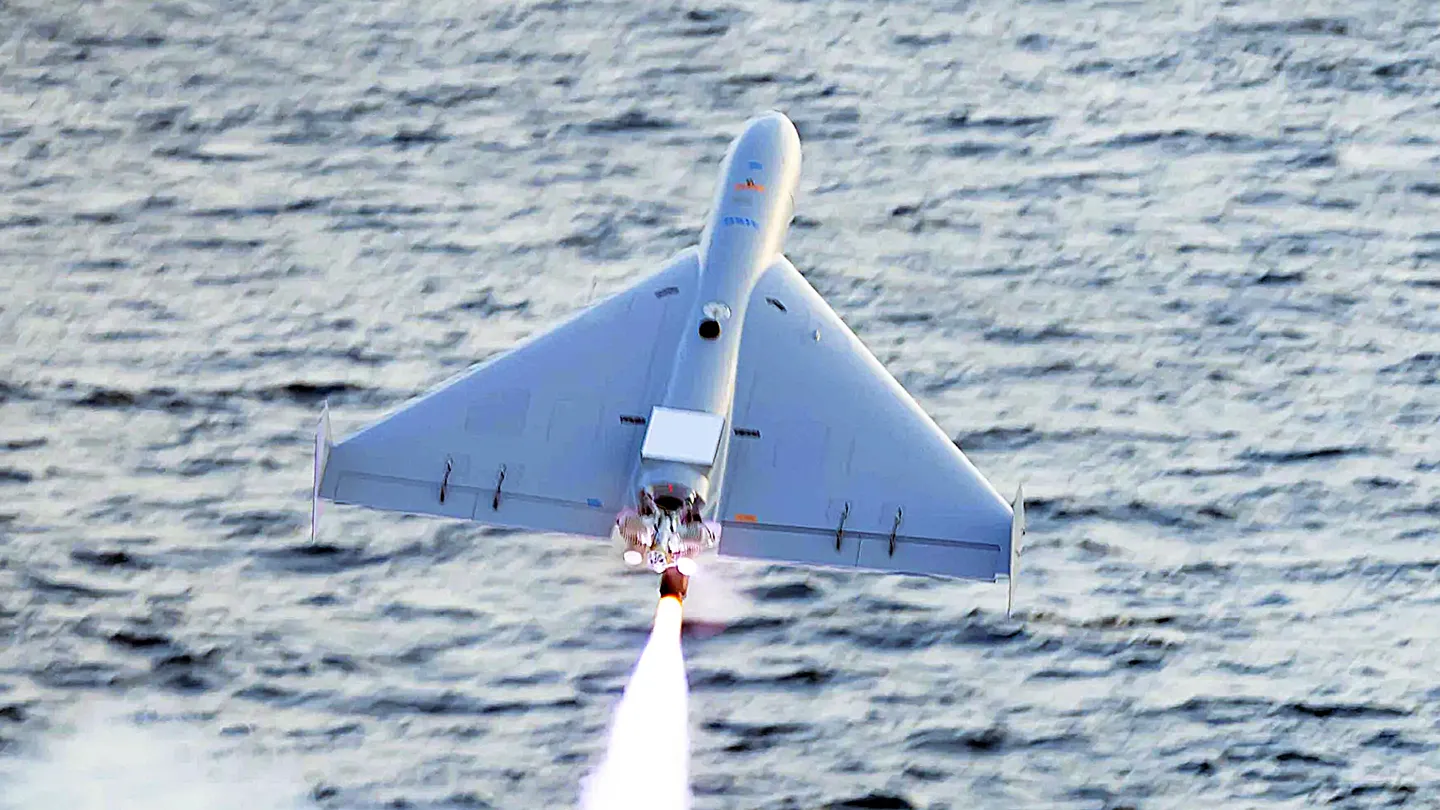
America copies Iran’s Shahed‑136 drone to build its own low‑cost FLM‑136 kamikaze attack drone a development that signals a major shift in modern warfare and military strategy. As conflicts increasingly involve inexpensive unmanned weapons, the United States is adapting by reverse‑engineering and deploying its own version of Iran’s widely known Shahed‑136 loitering munition.
The new American model, officially designated the FLM‑136 and commonly referred to as LUCAS (Low‑Cost Uncrewed Combat Attack System), has already been utilized in combat as part of U.S. operations in the Middle East, underscoring how battlefield innovation is now influenced by the dynamics of low‑cost drone technology.
What the FLM‑136 (LUCAS) Drone Is and Why It Matters
The FLM‑136 drone isn’t just another unmanned aircraft it represents a strategic pivot. Designed and manufactured by U.S. defense company SpektreWorks, the FLM‑136 was developed using the design blueprint of Iran’s HESA Shahed‑136 drone, a cheap and effective one‑way attack UAV used extensively by Iran and its allies.
The original Shahed‑136, built for relatively low cost, became prominent due to its role in asymmetric warfare, where sheer numbers and affordability gave Iran a tactical advantage against more traditional military forces. Each Iranian‑designed unit costs roughly between $20,000 and $50,000, making it exceptionally affordable compared with high‑end military hardware.
In response to this evolving threat environment, the United States made the unusual decision to copy this opponent technology a practice once unusual for a superpower traditionally reliant on proprietary defense systems. The result is a drone that mirrors the inexpensive yet effective Iranian design while incorporating U.S. innovations in autonomy and battlefield interoperability.
Deployment and Military Use
The FLM‑136 (LUCAS) drone was publicly deployed for the first time in early 2026, with U.S. Central Command (CENTCOM) announcing that it had been used operationally during strikes on Iranian targets as part of current military actions in the Middle East.
This marked the first combat use of U.S.‑built drones designed specifically for one‑way kamikaze missions a controversial but increasingly common component of modern warfare. The decision reflects a broader acceptance within the Pentagon that low‑cost, expendable drones can play a decisive role alongside traditional weapons systems.
According to military sources, the FLM‑136 is capable of flying long distances autonomously and striking pre‑designated targets, much like the original Shahed‑136 design. With an estimated unit cost of about $35,000, it is far cheaper than traditional strike missiles or precision guided munitions.
Strategic Implications of Reverse‑Engineering Enemy Technology
The fact that America copies Iran’s Shahed‑136 drone to build its own low‑cost FLM‑136 kamikaze attack drone represents a notable shift in military procurement strategy. In the past, major powers have often built their own advanced versions of cutting‑edge systems developed domestically or by allies. But adopting an adversary’s design especially one first made by a mid‑tier military industry reflects how modern warfare demands agility, adaptability, and cost‑efficiency.
Experts say this trend highlights a broader transformation:
- Cost Efficiency Over Traditional Platforms: Conventional missiles or manned strike aircraft can cost millions per sortie, while inexpensive drones like FLM‑136 change the economics of battle.
- Asymmetric Warfare Reality: The success of low‑cost drones in conflicts ranging from Ukraine to the Middle East has underscored their value. The U.S. move to adopt and adapt this technology acknowledges that even advanced military powers must innovate using all available models.
- Technology Transfer and Learning: Reverse‑engineering adversary systems allows the U.S. to quickly understand their strengths and weaknesses — a practice once more common in the Cold War era. This provides strategic insights while accelerating development.
International Reactions and Criticism
Unsurprisingly, Iran itself has responded to these developments with sharp rhetoric. Iranian military officials have portrayed the U.S. adoption of Shahed‑style drone technology as evidence that Tehran’s indigenous capabilities have forced even powerful militaries to acknowledge their design’s effectiveness.
Some defense analysts outside the U.S. have been critical as well, questioning whether copying an opponent’s drone design sets a precedent for escalatory dynamics in global defense procurement. Critics argue that such practices might erode norms around intellectual property in military technology and blur lines between innovation and imitation.
Other analysts counter that the realities of modern conflict dominated by drone swarms, autonomous systems, and low‑cost attritable weapons have redefined what effective military strategy looks like. In this view, adapting and adopting successful designs from any source is simply smart strategy in an era where conflicts can be decided by numbers and technology at lower costs.
How FLM‑136 Is Changing Battlefield Dynamics
The introduction of the FLM‑136 drones impacts modern warfare in several key ways:
1. Swarm Capabilities
Because they are inexpensive, these drones can be deployed in larger numbers, potentially overwhelming traditional defense systems designed for high‑value targets. This mirrors how Iranian and Russian forces have used drone swarms to complicate air defense efforts.
2. Integrated Autonomy
While the FLM‑136 keeps the basic form factor of the Iranian Shahed‑136, U.S. engineers have tailored its guidance and network capabilities to improve autonomous target acquisition and coordination among multiple drones features that traditional versions lack.
3. Lower Operational Costs
The U.S. military’s adoption of these drones lowers the cost per strike significantly compared to cruise missiles or other high‑end systems. This cost advantage enables sustained operations with less strain on defense budgets.
Future Outlook: Drones in 21st Century Warfare
The recent trend of adopting low‑cost strike drones signals a fundamental evolution in military doctrine. As nations invest in autonomous systems, artificial intelligence, and unmanned platforms, the line between traditional and asymmetric warfare is continuing to blur.
America copies Iran’s Shahed‑136 drone to build its own low‑cost FLM‑136 kamikaze attack drone is not just a headline it reflects how global powers are recalibrating their strategies to address emerging threats and leverage cost effective technologies.
Experts believe that future conflicts will increasingly involve networks of unmanned systems operating alongside conventional forces, supported by advanced sensors and real‑time battlefield data. In this new environment, adaptability including learning from other nations’ innovations will be key to success.
Conclusion
The deployment of the FLM‑136 drone underscores a pivotal moment in military innovation and strategic planning. By embracing designs inspired by the Iranian Shahed‑136 long dismissed by many Western militaries as crude the United States is acknowledging a new reality: in the changing landscape of warfare, low cost, high effectiveness, and rapid deployment can be just as decisive as advanced technology.
As geopolitical tensions persist and conflicts evolve, the era of autonomous, inexpensive attack drones looks poised to shape the future battlefield. Staying informed about these developments is essential for anyone tracking global security trends.





If you are looking for big wins and exciting slots, this is the place. I just hit a decent jackpot this morning! Highly recommend mambawinslot
Slotsgo11—anyone had any luck there? I’ve been trying my hand at it lately. It’s pretty fun, if you like that sort of thing. Give it a spin! slotsgo11
Yo, I hit a lucky streak at spinph88casino! They’ve got a decent variety of games and the payouts seem alright so far. Might want to check them out at spinph88casino.
Vin123 is alright! I found the games selection pretty good, and the bonuses are a nice little perk. Had a decent time overall. Give it a look-see: vin123
Honestly one of the best casino experiences I’ve had online. The graphics are crisp and the loyalty rewards are a nice touch. xx88casino is a winner.
Best place to get the app without any hassle. The download link is direct and the app runs perfectly on my phone. Go to bingoplusappdownload now.
I had a great run today and won a decent amount. The withdrawal process was surprisingly quick and hassle free. Cheers to pk9999win