
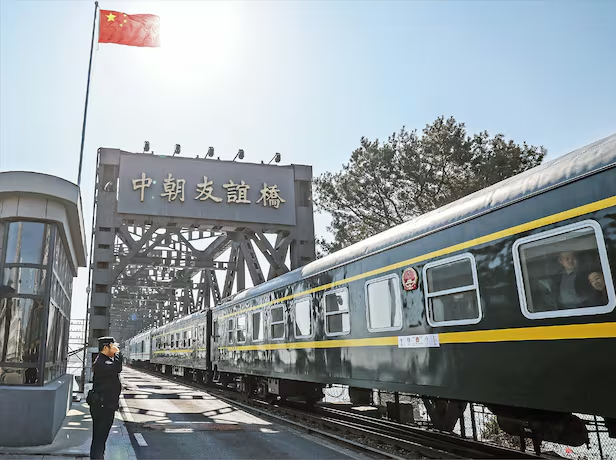
China North Korea passenger train services are set to resume after a six-year suspension, marking an important development in travel and diplomatic relations between the two neighboring countries. The train route connecting China and North Korea was halted in 2020 during the global COVID-19 pandemic and has remained inactive until now.
Officials have confirmed that preparations are underway to restart the passenger rail link, which historically connected Beijing in China with Pyongyang in North Korea. The return of the train service is expected to facilitate tourism, trade, and diplomatic engagement between the two countries.
The move signals a gradual reopening of North Korea’s borders and an effort to restore normal transportation channels that were disrupted during the pandemic years.
Background of the China–North Korea Rail Connection
The China North Korea passenger train route has long been considered one of the most unique international railway journeys in the world. Before its suspension, trains regularly operated between the Chinese capital Beijing and the North Korean capital Pyongyang.
The route allowed travelers to cross the border through the Dandong–Sinuiju railway bridge, which connects northeastern China with North Korea. This railway corridor has historically been one of the most important transport links between the two countries.
However, the outbreak of COVID-19 in early 2020 led North Korea to completely close its borders. As a result, passenger trains, flights, and most international transportation services were suspended.
Why the Train Service Was Suspended
The China North Korea passenger train service was halted primarily due to strict pandemic control measures implemented by North Korea. The country adopted one of the world’s most restrictive border policies to prevent the spread of the virus.
For several years, international travel into North Korea was virtually impossible, with only limited cargo trade allowed through certain routes.
The suspension affected tourism companies, travelers, and business operators who previously relied on the rail connection for travel and trade.
Now, with the gradual reopening of borders, authorities appear ready to restore passenger services.
Importance of the Train Route
The return of the China North Korea passenger train carries economic, political, and cultural significance.
1. Tourism Opportunities
Before the pandemic, foreign tourists often used the train route to visit North Korea through Chinese travel agencies. The rail journey offered a unique experience for travelers interested in exploring the isolated nation.
The resumption of the service may help revive tourism activities in the region.
2. Strengthening Diplomatic Ties
China and North Korea maintain close political and economic relations. Restarting passenger rail travel reflects continued cooperation and improved diplomatic engagement between the two countries.
3. Trade and Economic Activity
While freight trains continued to operate occasionally during the pandemic, passenger rail services play an important role in facilitating business travel and economic interactions.
What Travelers Can Expect
The China North Korea passenger train journey is considered one of the most unusual international train trips. Travelers typically board the train in Beijing and travel across northern China before reaching the border city of Dandong.
From there, the train crosses into North Korea via the Yalu River bridge and continues toward Pyongyang.
The trip usually takes around 24 hours, offering passengers a glimpse of changing landscapes and cultures along the way.
In the past, the train included sleeping cabins, dining facilities, and immigration checks conducted at border stations.
Security and Travel Regulations
Despite the resumption of the China North Korea passenger train, travel to North Korea remains highly regulated.
Visitors are generally required to travel with authorized tour groups, and independent tourism is not permitted. Travelers must also follow strict guidelines regarding photography, movement within the country, and interactions with local residents.
Authorities from both countries are expected to introduce updated travel regulations as the railway service resumes.
Global Reaction and Regional Impact
The news that the China North Korea passenger train will resume has attracted attention from travel analysts, geopolitical experts, and tourism operators.
Many experts believe the reopening of this transport link signals gradual normalization after years of pandemic-related isolation.
The development could also have broader implications for regional connectivity in East Asia. Transportation routes connecting China and North Korea are important for trade, tourism, and political relations.
Future of Cross-Border Travel
The resumption of the China North Korea passenger train may be just the first step toward restoring other transportation routes.
Observers expect that flights and additional rail connections could eventually follow if border restrictions continue to ease.
For travelers and tourism operators, the reopening of the rail service offers new opportunities to explore a destination that has remained largely closed to the outside world for several years.
Conclusion
The announcement that China will resume the China North Korea passenger train after six years represents a significant moment for international travel and regional cooperation. The restoration of the railway link reconnects Beijing and Pyongyang and highlights improving conditions for cross-border movement.
As the world continues to recover from the disruptions caused by the pandemic, the reopening of this historic railway route may pave the way for renewed tourism, trade, and diplomatic engagement between China and North Korea.
For now, the return of the China North Korea passenger train stands as a symbol of gradual reopening and renewed connectivity in the region.




Great experience so far. The customer support is helpful and the betting options are very flexible for different budgets. Check out br111bet
A very professional setup with a huge selection of tables. I love the atmosphere and the transparency of the games. I will definitely keep coming back to krevocasino.
Really honest platform with fair odds. I appreciate how transparent everything is here. Good luck to everyone playing! pk365lucky
The login process here is lightning fast. I hate waiting for pages to load, but this site is snappy and efficient. Definitely the best way to access ww777login.
I’ve been playing here for a while now and the interface is super smooth. Definitely one of the best spots to hang out and win big. Check out marvel77login for a great experience!
This place has a great vibe and the bonuses are actually fair. I am really enjoying my time on inyooe777 lately.
Super easy to navigate and the interface is very user friendly. Great experience so far for a local player. 369jllogin
Best mobile experience so far. The graphics are top notch and ggjiliapp runs perfectly on my phone.
The app version is just fantastic. It makes betting on the go so much easier and the updates are frequent. Download 617betapp and start winning.