
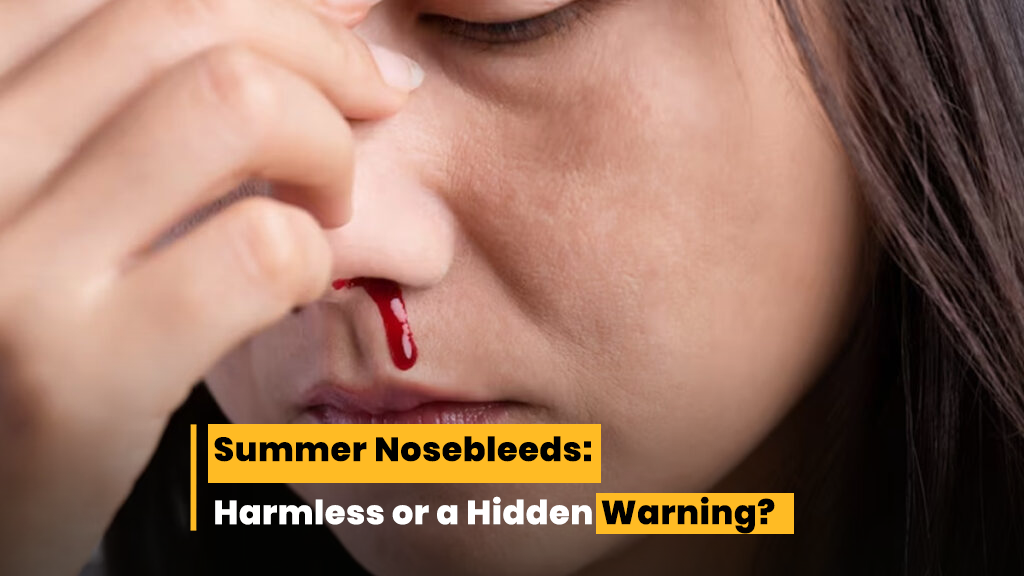
As temperatures rise, many people notice an unexpected and sometimes alarming issue nosebleeds. If you’ve ever experienced one during a hot day, you’re not alone. Summer nosebleeds are surprisingly common, but they can leave you wondering: Is this normal, or should I be concerned?
Let’s explore why nosebleeds happen more often in summer, when they’re harmless, and when they might signal something more serious.
Why Do Nosebleeds Increase in summer?
Your nose is lined with delicate blood vessels that sit very close to the surface. These tiny vessels can rupture easily under certain conditions and summer creates the perfect environment for that.
1. Dry Air and Heat
Hot weather often means drier air, especially if you’re using fans or air conditioning. This dryness can cause the inner lining of your nose to crack and become fragile, making bleeding more likely.
2. Dehydration
In summer, your body loses more fluids through sweat. When you’re not drinking enough water, your nasal tissues can dry out, increasing the risk of irritation and bleeding.
3. Expanded Blood Vessels
Heat causes blood vessels to widen (dilate), which makes them more prone to breaking even with minor irritation like sneezing or rubbing your nose.
4. Dust and Allergies
Summer can also bring increased exposure to dust, pollen, and pollutants. These irritants may lead to frequent nose rubbing or blowing, which can trigger bleeding. When Are Summer Nosebleeds Normal?
Most summer nosebleeds fall into the “harmless” category. You likely don’t need to worry if:
- The bleeding is occasional.
- It stops within 5-10 minutes.
- It occurs in only one nostril.
- There are no other symptoms.
These are typically caused by dryness or minor irritation and can be managed easily at home.
When Should You Be Concerned?
While occasional nosebleeds are normal, certain patterns may indicate an underlying issue that needs attention.
Watch out for these warning signs:
- Frequent nosebleeds (several times a week).
- Bleeding that lasts longer than 15–20 minutes.
- Very heavy or difficult-to-control bleeding.
- Feeling dizzy, weak, or faint during or after bleeding.
- Easy bruising or bleeding from other parts of the body.
In some cases, frequent nosebleeds may be linked to medical conditions such as:
- Hypertension – increased pressure can strain blood vessels.
- Allergic rhinitis – constant irritation from allergies.
- Sinusitis – inflammation in the nasal passages.
- Blood clotting disorders (less common but important to rule out).
If any of these apply, it’s a good idea to consult a healthcare professional.
Tips to Prevent Summer Nosebleeds
The good news is that most summer nosebleeds are preventable with a few simple habits:
Stay Hydrated
Drink plenty of water throughout the day to keep your body and nasal tissues moist.
Add Moisture to the Air
Using a humidifier can help prevent dryness, especially if you spend a lot of time indoors with air conditioning.
Keep Your Nose Moist
Apply a small amount of petroleum jelly or saline gel inside your nostrils to reduce dryness.
Avoid Irritation
Try not to pick or rub your nose, and be gentle when blowing it.
Protect Against Dust
If you’re in a dusty or polluted environment, consider wearing a mask or covering your nose lightly.
What to Do If a Nosebleed Happens
If you get a nosebleed, don’t panic. Follow these steps:
- Sit upright and lean slightly forward (this prevents blood from going down your throat).
- Pinch the soft part of your nose firmly for about 10 minutes.
- Breathe through your mouth.
- Apply a cold compress to your nose or cheeks.
Avoid lying down or tilting your head back, as this can make things worse.
Final Thoughts
Summer nosebleeds are usually nothing more than a seasonal inconvenience caused by heat, dryness, and dehydration. However, your body often gives subtle signals when something isn’t right. Paying attention to the frequency and severity of your symptoms can help you decide whether it’s just the weather or something worth checking out.






I feel like my luck has actually improved since I started playing here. The bonuses are generous and the graphics are top notch. It is a total win for me. Visit hoki69slot and see for yourself!
Honestly one of the most honest platforms I’ve encountered. Withdrawals are processed without any drama. Big thanks to rwin888!
Really impressed with the customer support on this site. They answered my questions in minutes. inzetto really knows how to treat their players right.
Super impressed with the graphics and the overall feel of the app. It makes the whole experience so much more immersive. I’m sticking with cl44app.
I’ve been looking for a reliable place to play and this one really delivers. The login process is smooth and the interface is very user friendly. Highly recommend 888win9comlogin for anyone starting out.
I feel like I have a lot of luck whenever I play on this site. The rewards are generous and the community is great. Try pklucky22