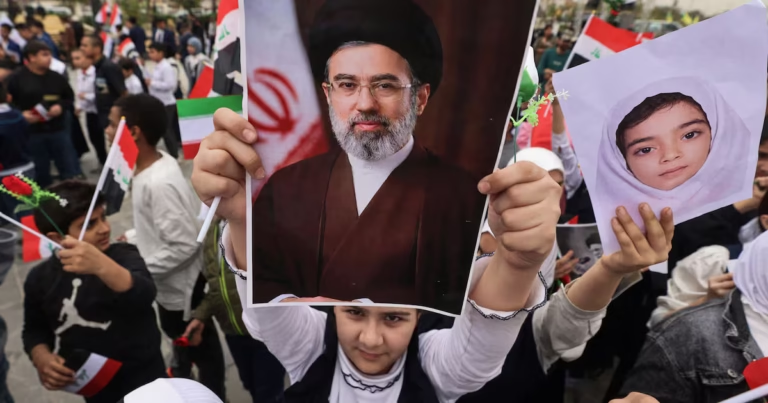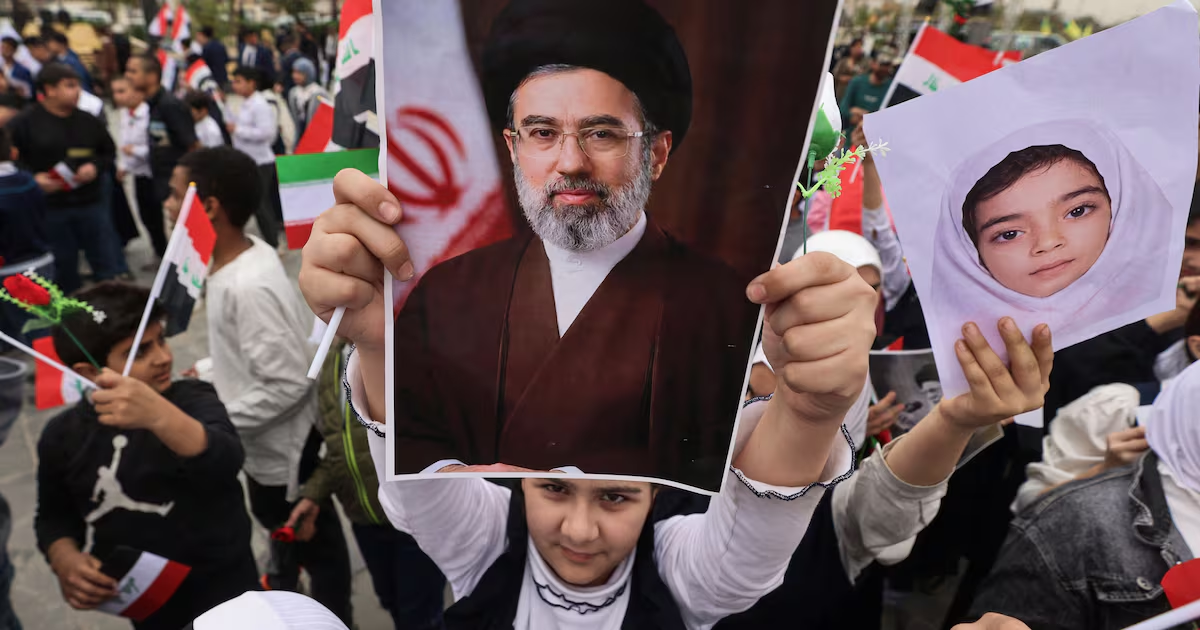
Iran attacks US bases remain a central issue in Middle East tensions after Mojtaba Khamenei stated that while Iran believes in maintaining friendly relations with neighboring countries, it will continue targeting American military bases in the region.
The statement came in Khamenei’s first major message after assuming leadership following the death of his father, Ali Khamenei. In his remarks, Iran’s new leader emphasized regional cooperation but warned that American military presence in the Middle East would remain a primary target.
The declaration highlights the deepening geopolitical tensions between Iran and the United States and reflects Tehran’s broader strategic position in the ongoing regional conflict.
Mojtaba Khamenei’s First Major Statement
In his first public address as Iran’s Supreme Leader, Mojtaba Khamenei stressed that Iran does not seek hostility with neighboring countries and instead values peaceful relations across the region.
However, he made it clear that American military installations across the Middle East remain legitimate targets for Iranian retaliation. According to reports, Khamenei stated that Iran would continue attacks on US bases unless the American military presence in the region ends.
The message was broadcast on Iranian state television and delivered at a time when tensions between Iran, the United States, and their regional allies are already extremely high.
Background: Leadership Change in Iran
The rise of Mojtaba Khamenei as Iran’s Supreme Leader follows a dramatic leadership transition. His father, Ali Khamenei, was killed during airstrikes amid escalating conflict between Iran and its adversaries earlier in 2026.
Mojtaba Khamenei, long considered a powerful figure within Iran’s political and religious establishment, is known for his close ties to the Islamic Revolutionary Guard Corps (IRGC).
Analysts believe his leadership signals a continuation of Iran’s hardline policies toward Western powers and strong support for regional allies.
Iran’s Strategy Toward US Military Presence
The issue of Iran attacks US bases is closely tied to Iran’s view of American military forces stationed throughout the Middle East.
US bases exist in several countries across the region, including:
- Iraq
- Kuwait
- Qatar
- Bahrain
- Saudi Arabia
Iranian officials argue that these bases threaten the country’s security and sovereignty. Tehran has repeatedly warned that American forces operating near Iranian territory make these installations potential targets during times of conflict.
Iranian authorities claim that any military action against US bases is part of a defensive strategy aimed at protecting national interests.
Regional Relations and Diplomacy
Despite the aggressive rhetoric toward the United States, Mojtaba Khamenei emphasized that Iran seeks friendly relations with neighboring countries in the Middle East.
According to the Iranian leadership, regional cooperation is essential for stability and economic development. Iran has often called for Middle Eastern countries to resolve their disputes independently without relying on foreign military powers.
At the same time, Khamenei warned neighboring states against allowing their territory to be used for attacks against Iran.
Escalating Conflict in the Middle East
The renewed warnings about Iran attacks US bases come amid an ongoing regional conflict that has already involved missile strikes, drone attacks, and military operations across multiple countries.
Reports indicate that Iranian forces and allied groups have targeted American military infrastructure in response to military operations against Iran.
For example, Iranian forces previously launched missile and drone attacks on US installations in the region, including bases in Kuwait and other strategic locations.
These developments have raised concerns among international observers about the possibility of a wider regional war.
Impact on Global Politics and Oil Markets
The escalating tensions between Iran and the United States could have major global consequences.
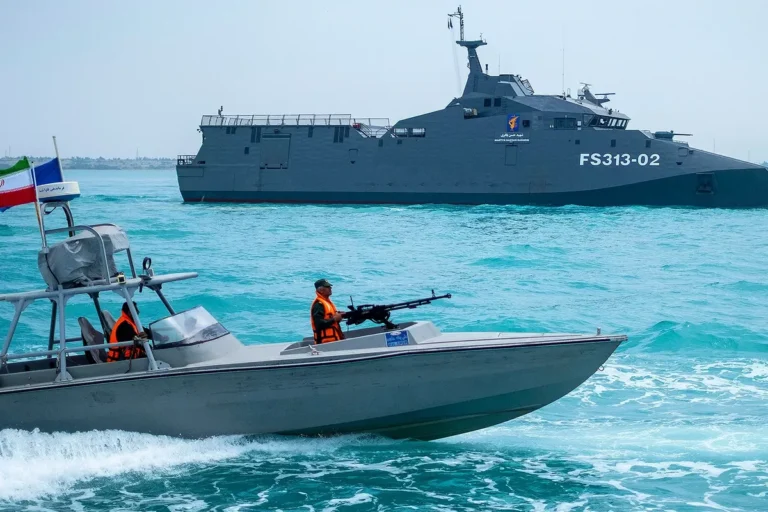
One of the biggest concerns is the security of shipping routes in the Strait of Hormuz, through which a significant portion of the world’s oil supply passes.
Iran has warned that it could restrict access to the strait if conflicts intensify, which could disrupt global oil supplies and drive energy prices higher.
Energy markets and international investors are closely monitoring developments in the region.
International Reactions
Global reactions to Iran’s statements have been mixed. Some countries have urged both Iran and the United States to de-escalate tensions and return to diplomatic negotiations.
Others worry that continued military confrontation could destabilize the Middle East and threaten global security.
Diplomatic efforts are ongoing as international organizations and governments attempt to prevent further escalation.
What This Means for the Region
The statement from Mojtaba Khamenei sends a clear message about Iran’s foreign policy direction under its new leadership.
While emphasizing friendship with neighboring states, Iran’s leadership appears determined to challenge the presence of US forces in the Middle East.
Analysts believe the coming months will be critical in determining whether tensions escalate further or diplomatic solutions emerge.
Conclusion
The declaration that Iran attacks US bases will continue despite Iran’s commitment to friendly relations with neighboring countries highlights the complex geopolitical dynamics shaping the Middle East today.
With Mojtaba Khamenei now leading Iran and regional tensions already high, the situation remains highly volatile. The balance between military confrontation and diplomatic engagement will likely determine the future stability of the region.
For now, the world watches closely as Iran’s new leadership sets the tone for its regional and international policies.