
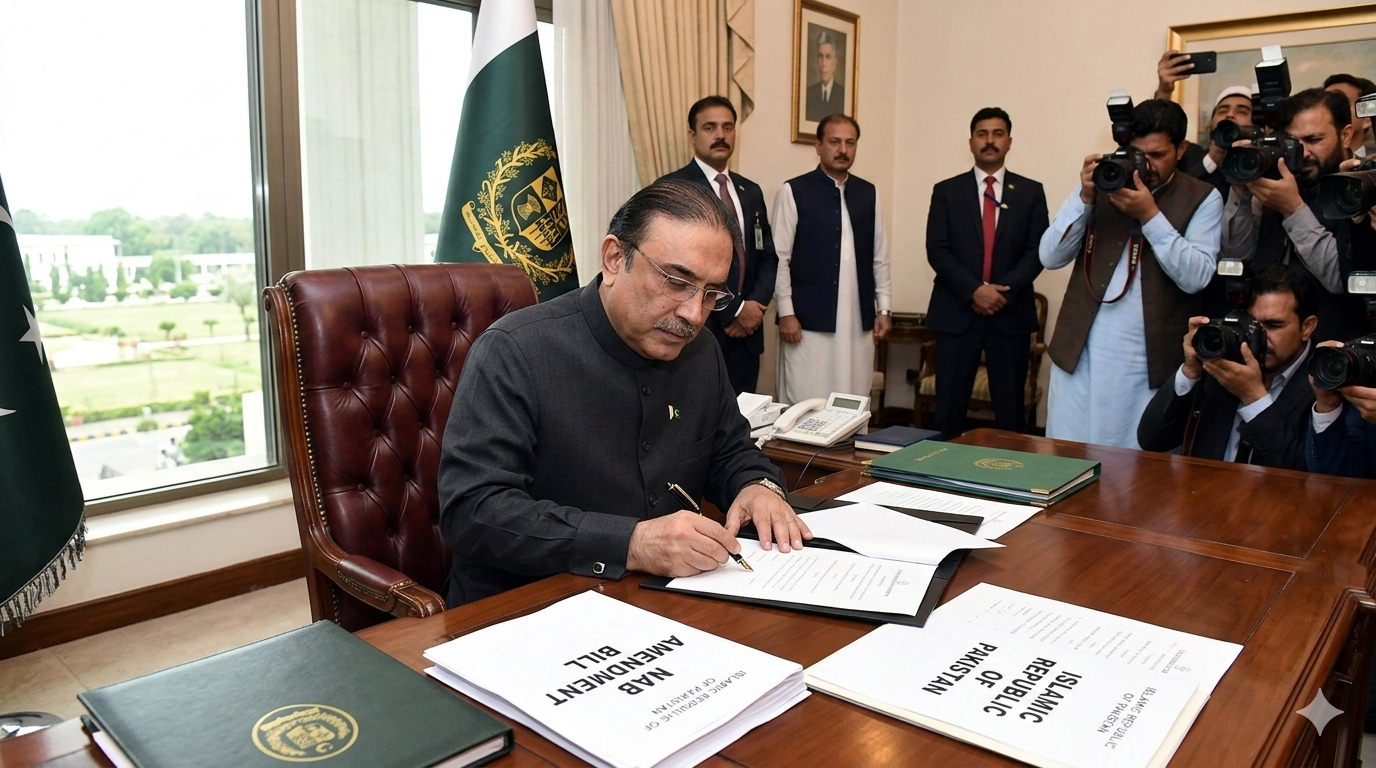
Pakistan’s accountability framework has once again taken center stage after Asif Ali Zardari approved the latest amendment to the law governing the country’s top anti-corruption body, the National Accountability Bureau (NAB). The approval of the NAB (Amendment) Bill marks a significant step in shaping the operational structure and leadership continuity of the institution responsible for investigating corruption and financial misconduct in the country.
The new amendment specifically focuses on extending the tenure of the NAB chairman, a move that has sparked debate among political leaders, legal experts, and governance observers across Pakistan. Supporters argue that the change ensures institutional stability and uninterrupted accountability efforts, while critics claim it raises concerns about oversight and transparency.
This development has broad implications for Pakistan’s political environment, governance system, and anti-corruption efforts.
Background of the NAB Amendment Bill
The National Accountability Bureau was established to combat corruption, financial crimes, and misuse of authority in Pakistan’s public sector. Over the years, NAB has played a central role in investigating high-profile corruption cases involving politicians, government officials, and business figures.
However, the organization has frequently been the subject of political and legal controversy. Various governments have attempted to reform the accountability system by introducing amendments to NAB laws, often arguing that changes are necessary to improve efficiency, fairness, and due process.
The latest amendment follows a series of legislative efforts aimed at restructuring the bureau’s operational procedures and powers.
The newly approved bill primarily focuses on one key aspect: extending the tenure of the NAB chairman. Lawmakers supporting the bill believe that continuity in leadership will help strengthen long-term accountability investigations and reduce administrative disruptions.
Key Changes Introduced in the Amendment
The amendment introduces several structural and administrative adjustments within NAB’s leadership framework. The most notable change is the extension of the chairman’s tenure, which aims to ensure that ongoing investigations and institutional strategies continue without interruption.
Some of the major elements associated with the amendment include:
- Extension of the NAB chairman’s tenure
- Adjustments to leadership continuity provisions
- Administrative reforms aimed at institutional stability
- Legal clarification regarding appointment and term limits
Proponents argue that these reforms will allow NAB to operate more effectively by preventing sudden leadership gaps that could delay investigations or disrupt major corruption cases.
Government’s Perspective on the Amendment
Supporters of the bill within the government emphasize that the extension of the chairman’s tenure is a practical administrative reform rather than a political maneuver. They argue that accountability institutions require consistent leadership to operate efficiently.
According to government representatives, frequent leadership changes can slow down investigations and weaken institutional capacity. Large corruption cases often involve complex financial records, cross-border transactions, and lengthy legal processes that can take years to resolve.
By extending the chairman’s tenure, policymakers believe that the bureau can maintain continuity in policy direction and investigative oversight.
Additionally, officials say the amendment aligns NAB’s structure with other international accountability institutions where leadership continuity is considered essential for long-term investigations.
Opposition and Criticism
Despite the government’s justification, the amendment has faced criticism from opposition parties and some legal experts. Critics argue that extending the tenure of a powerful accountability official could raise concerns about independence and political influence.
Some opposition leaders believe that such amendments should be introduced through broader consultation and institutional reforms rather than focusing on a single leadership position.
Legal analysts have also emphasized the importance of maintaining a transparent and balanced accountability system that ensures checks and balances within powerful institutions like NAB.
Critics warn that without adequate oversight, extending leadership terms could potentially concentrate authority within the bureau’s leadership.
Impact on Pakistan’s Accountability System
The extension of the chairman’s tenure could significantly influence the operational dynamics of Pakistan’s accountability framework.
One of the potential advantages is greater continuity in major investigations. High-profile corruption cases often require extensive documentation, financial tracking, and coordination between multiple government agencies.
A stable leadership structure may allow investigators to pursue cases more consistently without disruptions caused by administrative transitions.
However, the move also places greater responsibility on lawmakers and oversight institutions to ensure that accountability processes remain transparent, fair, and independent.
Maintaining public trust in the accountability system remains a critical challenge for Pakistan’s governance structure.
Legal and Institutional Implications
From a legal standpoint, amendments to accountability laws often have far-reaching implications. The NAB ordinance has been amended multiple times in the past, each change reflecting shifting political priorities and legal interpretations.
Legal experts suggest that while leadership continuity can improve efficiency, broader reforms may still be necessary to strengthen procedural fairness and due process in accountability cases.
Issues such as investigation procedures, arrest powers, and prosecution standards have long been debated in relation to NAB’s operations.
The latest amendment may reopen discussions about whether Pakistan’s accountability system requires deeper structural reforms beyond leadership arrangements.
Public Reaction and Political Debate
Public reaction to the amendment has been mixed. Supporters of stronger anti-corruption measures believe that stable leadership could help NAB pursue long-term investigations more effectively.
Others remain skeptical, arguing that accountability institutions must operate with strict neutrality and independence to maintain credibility.
Political commentators note that accountability reforms in Pakistan often become part of broader political debates between government and opposition parties.
As a result, the NAB amendment has already sparked discussions across media platforms, legal forums, and policy circles.
The Role of Accountability in Pakistan’s Governance
Accountability institutions like NAB play a critical role in maintaining transparency and integrity within government institutions. Corruption investigations and financial oversight are essential components of democratic governance.
Effective accountability mechanisms help build public confidence in state institutions and ensure that public resources are managed responsibly.
However, the success of such institutions depends not only on legal authority but also on public trust, transparency, and institutional independence.
Balancing these factors remains one of the key challenges facing Pakistan’s accountability system.
What Happens Next?
With presidential approval now granted, the NAB (Amendment) Bill will become part of Pakistan’s legal framework governing the country’s accountability body.
The implementation of the amendment will likely influence future administrative decisions within NAB and may shape the direction of ongoing corruption investigations.
Observers will be closely watching how the extended tenure of the chairman affects the bureau’s performance, case management, and public perception.
The amendment may also lead to further discussions in parliament regarding broader reforms to Pakistan’s accountability laws.
Conclusion
The approval of the NAB (Amendment) Bill by President Asif Ali Zardari marks another important chapter in Pakistan’s ongoing efforts to reform its accountability system.
By extending the tenure of the NAB chairman, the government aims to ensure leadership stability and institutional continuity. While supporters see the move as a practical reform, critics continue to emphasize the importance of transparency and oversight.
Ultimately, the effectiveness of the amendment will depend on how it influences NAB’s ability to conduct fair, independent, and efficient corruption investigations.
As Pakistan continues to navigate complex political and governance challenges, accountability reforms will remain a crucial topic in the country’s policy and legislative discussions.