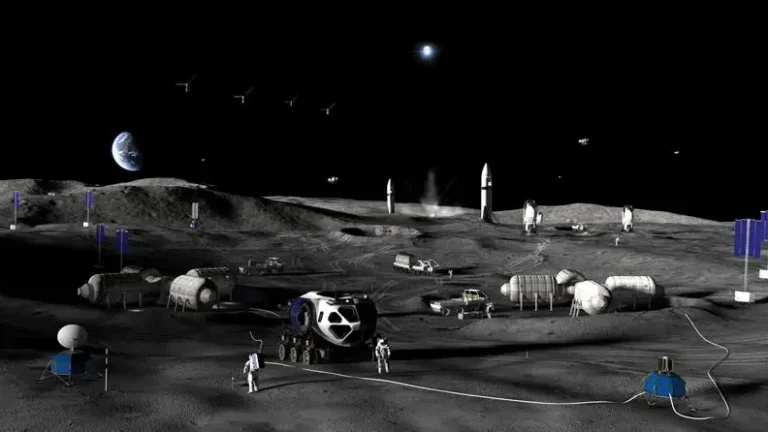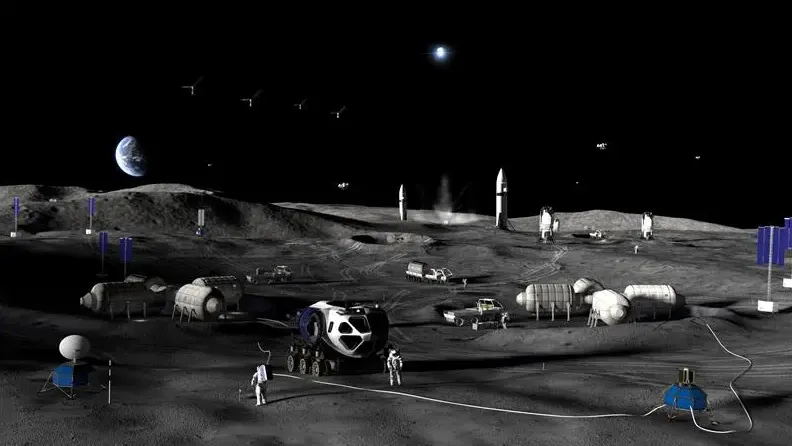
NASA has announced a significant shift in its strategy for the Moon and Mars. The agency is abandoning plans for a space station orbiting the Moon and is instead allocating $20 billion over the next seven years to establish a base on the lunar surface. Additionally, NASA is moving forward with plans to deploy a nuclear-powered spacecraft to Mars.
During a meeting in Washington, DC, with partners, contractors, and government officials involved in the Artemis program, NASA Administrator Jared Isaacman explained that the agency will expand robotic missions to the Moon and begin preparations for using nuclear energy on the lunar surface.
Isaacman, who was appointed by US President Donald Trump and assumed leadership in December, explained that these updates are part of a wider restructuring of NASA’s long-term strategy linking the Moon and Mars.
The proposed lunar base aims to enable a sustained human presence on the Moon’s surface. Robotic missions will play a key role in preparing the location by testing technologies and initiating infrastructure development before astronauts return later in the decade.
NASA also revealed plans to launch a spacecraft named Space Reactor 1 Freedom by the end of 2028. This mission is intended to showcase nuclear electric propulsion capabilities in deep space during a journey toward Mars.
As part of the mission, the spacecraft will carry helicopters to Mars, similar to the Ingenuity aircraft that accompanied the Perseverance rover. According to the agency, this effort will help transition nuclear propulsion systems from experimental stages into practical use for future space missions.