

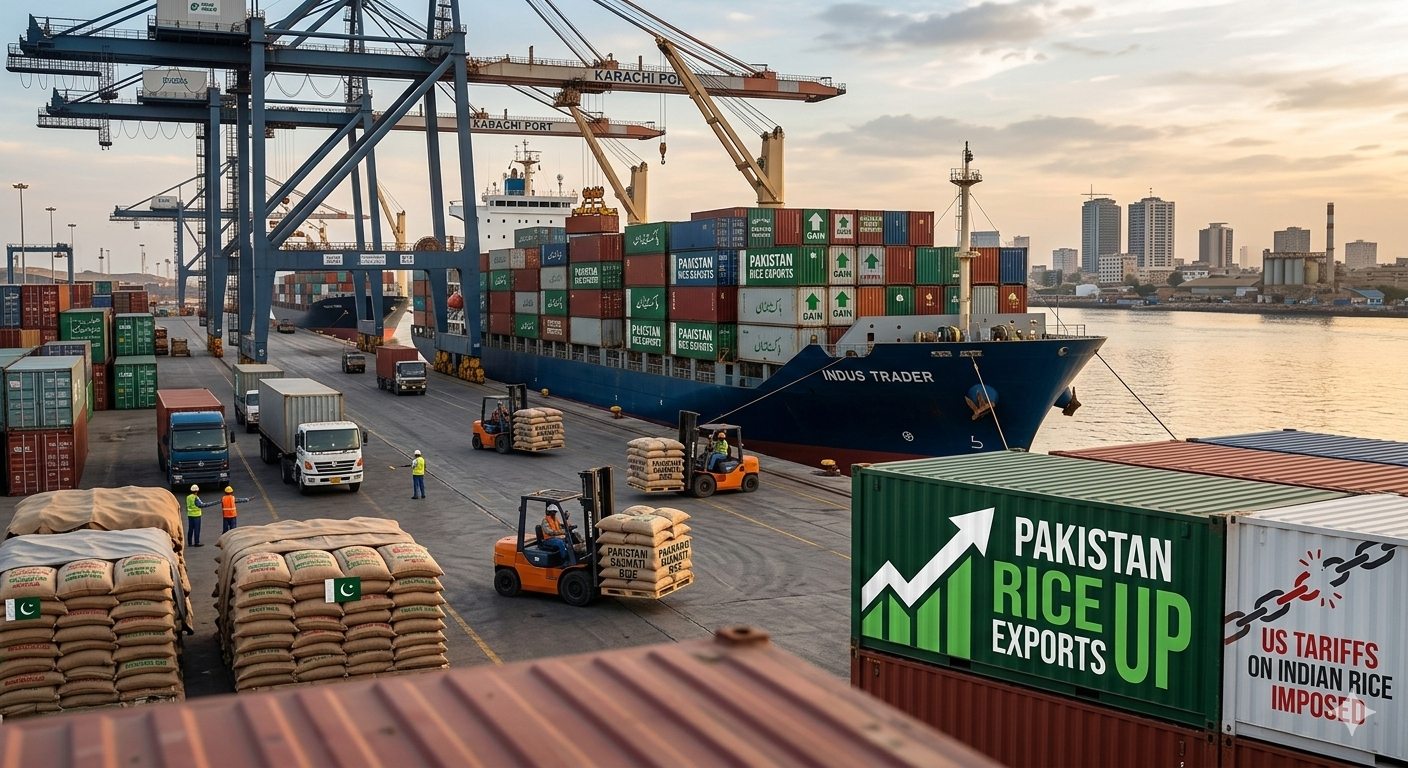
Pakistan’s rice sector is witnessing renewed optimism as trade dynamics in the United States shift in its favor. With higher US tariffs on Indian basmati rice, Pakistani exporters are now positioned to strengthen their footprint in one of the world’s most valuable food import markets.
Strong Growth in Pakistan’s Basmati Exports
In recent years, Pakistan has steadily increased its basmati rice exports. According to the Rice Exporters Association of Pakistan (REAP), the country exported over 772,725 tonnes of basmati rice in FY24, generating $876.9 million in revenue.
This marks a significant increase compared to the previous fiscal year, when exports stood at 595,120 tonnes valued at $650.4 million.
Export performance improved not only in volume but also in pricing. The average export price per tonne rose from $1,092.93 to $1,134.86, reflecting stronger global demand and better market positioning.
United States: A Key Market for Pakistani Rice
The United States has emerged as Pakistan’s largest destination for basmati rice exports. Between November 2023 and October 2024, the US accounted for 24% of Pakistan’s total basmati exports, representing 1,519 shipments, according to data from Volza’s Global Trade platform.
Other important European markets included:
- Italy – 14% share (908 shipments)
- United Kingdom – 11% share (716 shipments)
These figures highlight the growing global appetite for Pakistani basmati, particularly in Western markets with strong South Asian and Middle Eastern consumer bases.
Rising US Demand for Imported Rice
According to the United States Department of Agriculture (USDA), US rice imports have steadily increased over the past three decades. Imports accounted for just 7% of the domestic market in 1993–94, but that figure has risen to over 25% by 2022–23.
More than 60% of US rice imports consist of aromatic Asian varieties, including:
- Basmati from India and Pakistan
- Jasmine rice from Thailand
This trend underscores the strong and growing demand for premium aromatic rice in the American market.
Tariff Shift Creates Competitive Edge for Pakistan
Recent US trade measures targeting India’s energy and trade ties with Russia have led to wide-ranging tariffs on several Indian goods, including electronics, pharmaceuticals, and basmati rice.
While some sectors later received exemptions, Indian basmati rice remains subject to a 50% tariff.
In contrast, Pakistani basmati rice faces a significantly lower tariff of 19%, giving it a clear price advantage in the US market. This gap creates a strategic opportunity for Pakistani exporters to capture greater market share as buyers look for more competitively priced alternatives.
Outlook for Pakistan’s Rice Industry
With rising US import demand and favorable tariff differentials, Pakistan’s rice exporters may continue to see improved sales volumes and stronger pricing power.
If managed strategically through quality control, branding, and consistent supply Pakistan could solidify its position as a leading supplier of premium basmati rice in the United States.
As global trade patterns evolve, the US tariff on Indian rice may prove to be a turning point for Pakistan’s rice export industry.