In the hours leading up to the announcement of a two-week ceasefire between Iran and the US, there were some early signs of hope coming from Pakistan. The team handling the negotiations on Pakistan’s side was very small, and the atmosphere was described as serious and quiet, but still hopeful that the fighting would pause soon. Those speaking to the media were not part of this inner group.
Pakistan has been acting as a go-between for Iran and the US over the past few weeks, relaying messages between the two countries. Pakistan has a long-standing relationship with Iran, sharing a border and often calling it a “brotherly” relationship.
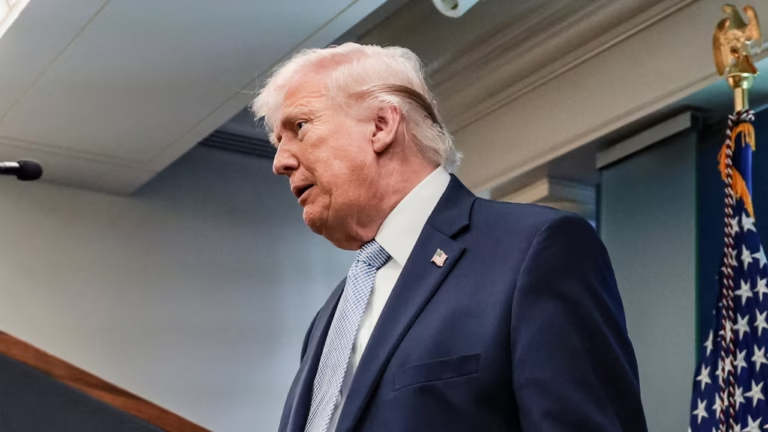
Regarding its ties with the US, President Trump has praised Pakistan’s military chief, Field Marshal Asim Munir, calling him his “favorite” and saying he knows Iran “better than most.” Even so, there was no guarantee that an agreement would be reached. Pakistan’s Foreign Minister, Ishaq Dar, told parliament on Tuesday night that until the previous day, optimism was high that progress was being made. But tensions rose after Israel attacked Iran on Monday, followed by Iran’s strike on Saudi Arabia.
Field Marshal Asim Munir was even more outspoken, telling military officials that Iran’s attack on Saudi Arabia undermined efforts to resolve the conflict peacefully. This marked some of the strongest criticism Pakistan has directed at Iran since the fighting started.
Some experts believe Pakistan’s position could put more pressure on Iran. Pakistan also has a defense agreement with Saudi Arabia, though it has not yet been activated despite repeated attacks.
After midnight in Pakistan, the Prime Minister shared on X that diplomatic talks were moving “steadily and strongly” and could soon bring real results. He asked President Trump to extend the two-week deadline and urged Iran to keep the Strait of Hormuz open during that period.
Iran’s ambassador to Pakistan, Reza Amiri Moghadam, posted on X around 3:00 a.m. local time that “a step forward has been made from a critical stage.”
Finally, just before 5:00 a.m., Pakistan’s Prime Minister announced that a ceasefire had been agreed upon and invited both sides to meet in Islamabad on Friday, April 10, to negotiate a more permanent agreement.