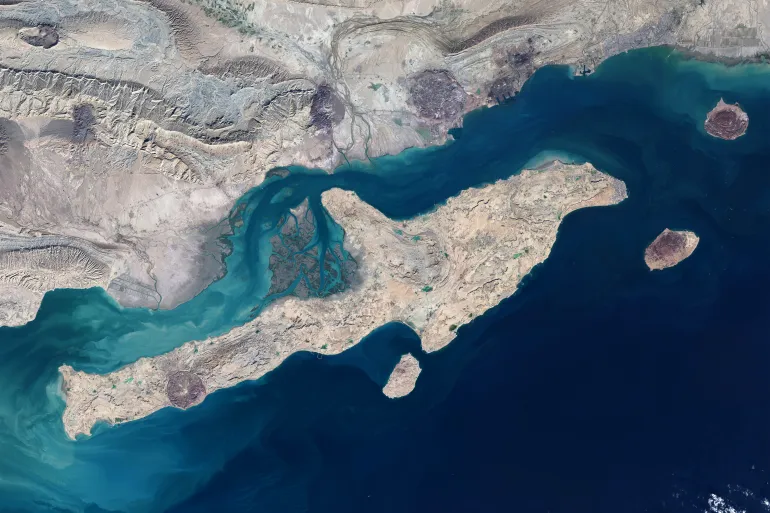
What is the Strait of Hormuz, and why is it so important? Why has it become a focal point of global tension? What is the underlying significance behind it? In this blog, we will explore these questions in detail.
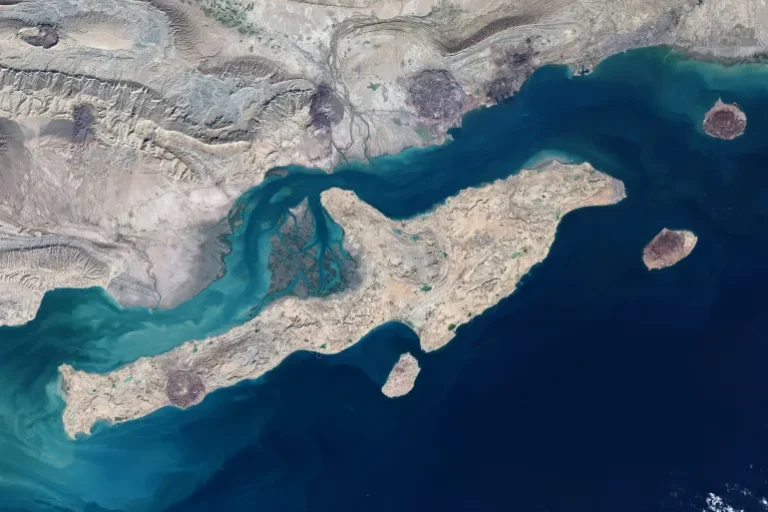
The Strait of Hormuz is the vital, narrow maritime chokepoint located between the Persian Gulf to the west and the Gulf of Oman/Arabian Sea to the east. It separates Iran to the north from the Musandam Peninsula (Oman) and the United Arab Emirates to the south. It serves as the world’s most important oil transit channel, with roughly 20% of global oil consumption passing through it daily, making it critical to global energy security.
Strategic Features of the Strait of Hormuz
Location and Physical Characteristics:
The strait varies in width from about 21 to 60 miles and serves as the sole maritime gateway connecting the Persian Gulf with the open sea.
Role in the Global Economy:
Roughly 20 million barrels of oil are transported through this passage each day accounting for nearly one-fifth of worldwide consumption. In addition, around one-third of global liquefied natural gas (LNG) shipments move through this route, largely sourced from Saudi Arabia, Iran, the UAE, Kuwait, and Iraq.
Navigation and Traffic:
The waterway is a critical route for oil tankers and other commercial ships, which travel through two designated shipping channels, each about 3 kilometers wide, separated by a safety buffer.
Political and Security Concerns:
As one of the world’s most sensitive maritime chokepoints, any threat to disrupt traffic such as statements by Iran in early 2026 can lead to sharp increases in oil prices and heightened international military activity.
Why has it become a focal point of global tension?
The Strait of Hormuz has emerged as a major hotspot of global tension mainly because it serves as the most important maritime bottleneck for oil transport. Around 20-30% of the world’s seaborne oil and liquefied natural gas (LNG) moves through this narrow route each day. As the only sea link connecting the oil-rich Persian Gulf to international waters, any interruption whether caused by political conflict, sanctions, or military action can quickly drive up global energy prices and affect economies across the world.
The Strait of Hormuz is often reduced to a simple geographic label a narrow channel linking the Persian Gulf with the Arabian Sea. In reality, it is far more than that. It is a vital lifeline of the global energy system. A complete closure would not just disrupt oil markets or intensify regional tensions; it would shake the very structure of globalization itself.
Nearly one-fifth of the world’s oil supply about 20 million barrels per day flows through this narrow passage, along with a significant share of global LNG. Yet its true importance lies beyond these figures. The modern global economy is built on the belief that such flows are constant, dependable, and politically secure. Shutting down the Strait would expose the fragility of this belief and disrupt the system at its core.
A Crisis Extending Beyond Oil
While oil often takes center stage in discussions about global disruptions, closing the Strait would expose deeper vulnerabilities within the world’s interconnected systems. Modern economies are tightly linked, with energy forming the foundation upon which countless industries depend.
Shipping routes through the Strait carry not only crude oil but also petrochemicals, fertilizers, and essential industrial materials. These resources feed directly into global manufacturing and agriculture. When such supply chains are interrupted, the consequences quickly spread far beyond the immediate region.
Take agriculture as an example. Fertilizers sourced from the Gulf play a crucial role in sustaining crop yields worldwide. Any disruption in their supply could lead to reduced agricultural output, rising food prices, and increased strain on countries that rely heavily on imports. In this way, a disruption at sea can evolve into a serious food security challenge in distant parts of the world.
Similarly, industries that rely on petrochemical byproducts such as plastics, medicines, and electronic components would face shortages and higher production costs. The closure of a single strategic chokepoint can therefore trigger cascading effects across multiple sectors, highlighting just how interdependent today’s global economy has become.
Conclusion
Closing the Strait of Hormuz is not a viable solution, as it serves as one of the most critical routes for global oil trade. The current rise in global tensions is largely due to the fact that this passage supplies a significant portion of the world’s oil and liquefied natural gas. Any disruption in this route has already led to shortages of oil and gas, particularly affecting Asian countries, where inflation has increased and fuel prices have surged. If such conditions persist, the world may also face serious shortages of essential goods, including food, in the near future.