

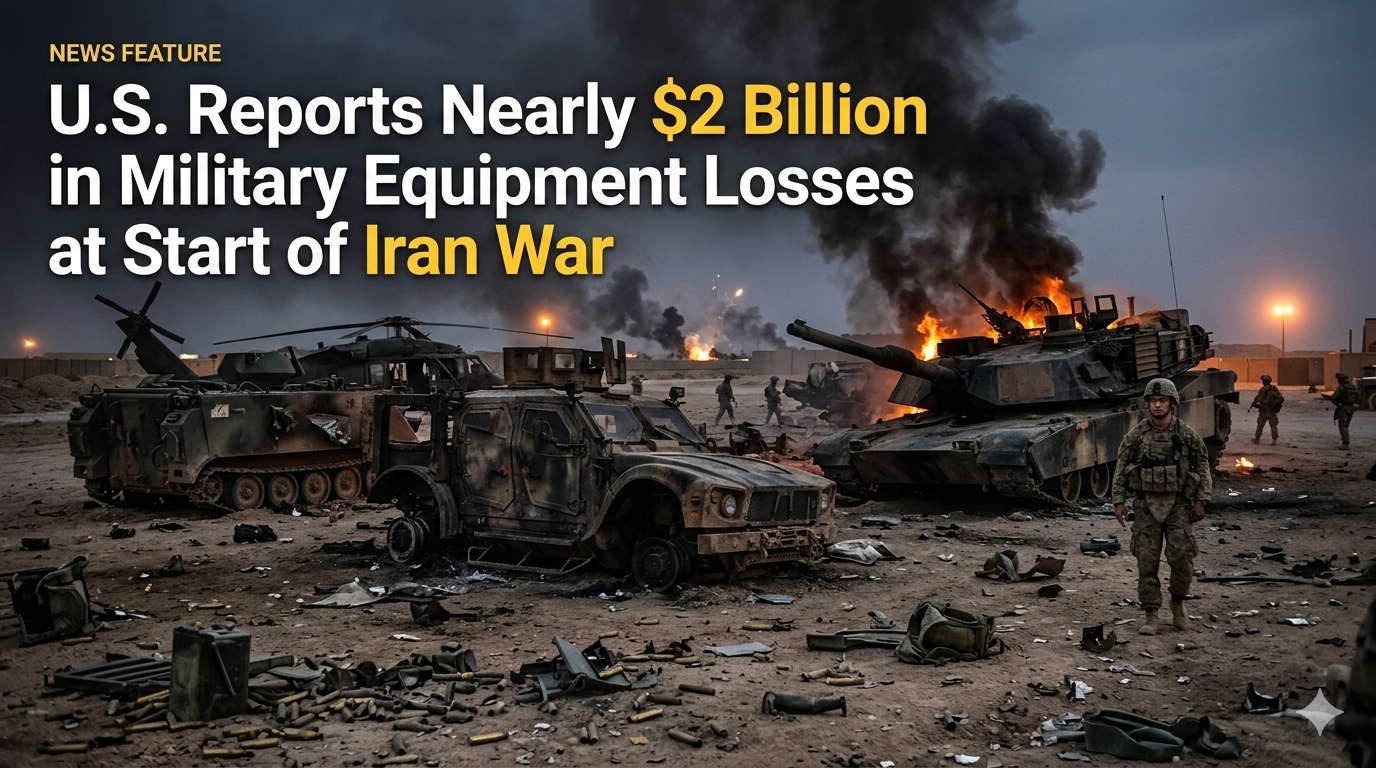
In the initial days of escalating conflict between the United States and Iran, Washington has announced substantial losses of military equipment, totaling nearly $2 billion in damages. This figure underscores the significant material cost of the early phase of the war, which has reverberated through global geopolitics and defense discussions.
What Happened?
The military engagement began on February 28, 2026, when the U.S. and allied forces launched a series of operations against key Iranian targets. In the ensuing retaliation, Iranian forces struck multiple U.S. military installations and assets across the Middle East, resulting in enormous equipment losses.
Breakdown of Losses
A detailed analysis by Anadolu Agency, referenced in open-source intelligence data and satellite imagery, highlights the major components of the nearly $2 billion in losses:
- $1.1 billion radar system – A sophisticated AN/FPS-132 early warning radar at Al Udeid Air Base in Qatar was hit during a missile strike, accounting for the largest single loss.
- Three F-15E fighter jets – These aircraft were destroyed in Kuwait due to a “friendly fire” incident involving allied air defenses. The cost to replace these jets is estimated at about $282 million.
- THAAD radar component – Iranian forces reportedly damaged a radar element of a THAAD anti-ballistic missile system in the United Arab Emirates, valued around $500 million.
- Additional equipment and infrastructure – Satellite communications terminals and other facilities at various bases were also destroyed or significantly damaged.
Broader Impacts
These losses not only represent a financial blow to the U.S. military, but also raise questions about strategic vulnerabilities in battlefield environments where high-value hardware is exposed. Military analysts suggest that the scale of these losses, even for a major armed power like the United States, reflects the intense and complex nature of modern aerial and missile warfare.
What This Means for the Future
As the conflict continues to unfold, the implications of equipment losses are being closely watched by defense experts and global policymakers:
- Strategic reassessment: Military planners may need to reconsider force deployment and vulnerability mitigation.
- Budgetary pressure: Replacement and repair of expensive hardware could factor into future defense budgets.
- Geopolitical ripple effects: Escalating hostilities and economic consequences are influencing markets, regional diplomacy, and international security alliances.
The situation remains fluid, and further developments are expected as both sides adjust their tactics and objectives in what has become one of the most consequential conflicts of the decade.