
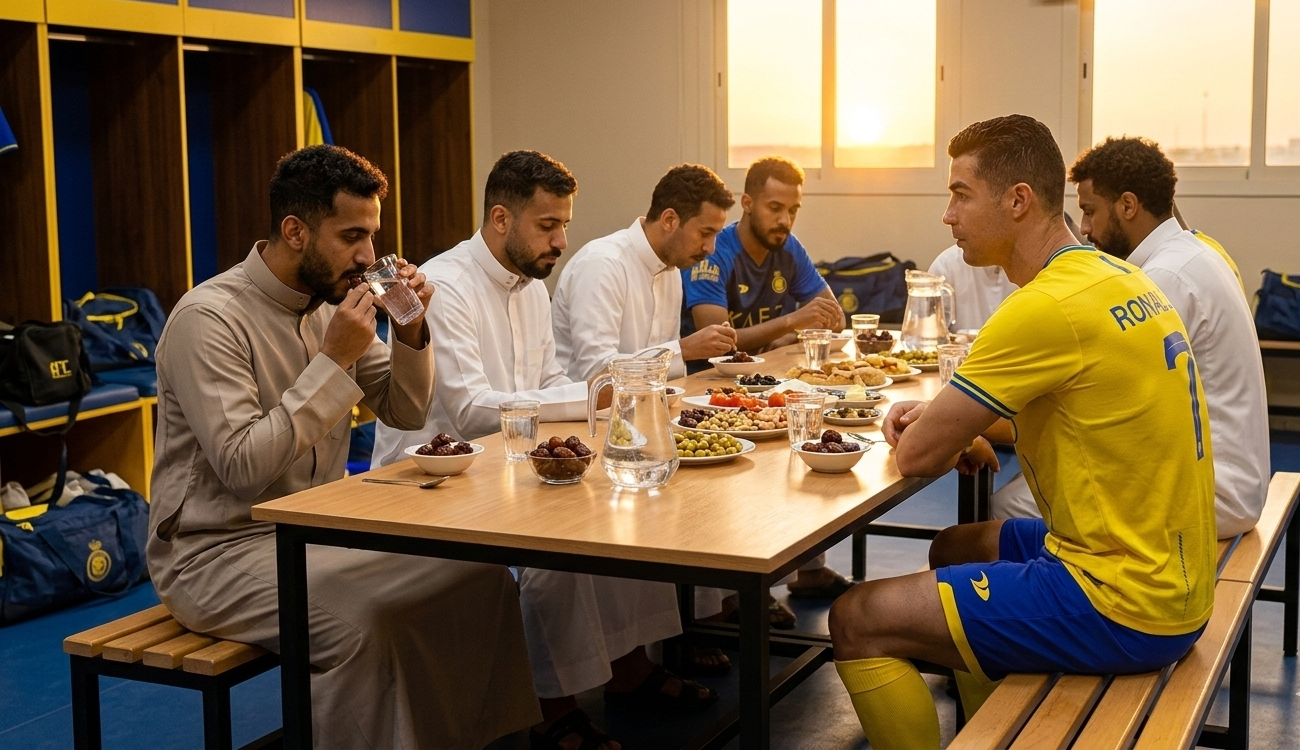
Portuguese football icon Cristiano Ronaldo reportedly fasted for two days during the holy month of Ramadan to understand the experience of his Muslim teammates while playing for Al Nassr FC in Saudi Arabia.
The story was revealed by former Al Nassr defender Shaye Sharahili during an appearance on the Thmanyah Sports Podcast, where he shared details about Ronaldo’s curiosity and respect toward Islamic traditions during his time in the Middle East.
According to Sharahili, Ronaldo voluntarily chose to fast for two days during Ramadan out of interest and respect for his Muslim teammates who observe the sacred month every year.
The gesture quickly gained attention among fans and sports analysts, who viewed it as a sign of Ronaldo’s openness to understanding different cultures and traditions within a diverse team environment.
Ronaldo’s Curiosity About Ramadan
Ramadan is considered the holiest month in Islam, during which Muslims fast from dawn until sunset. During this time, believers abstain from food, drink, and other physical needs during daylight hours while focusing on prayer, charity, and self-discipline.
For professional athletes, fasting during Ramadan can be particularly challenging. Football players must maintain high levels of physical performance while managing long hours without food or water.
According to Shaye Sharahili, Ronaldo became curious about how his Muslim teammates managed their routines while fasting during intense training sessions and competitive matches.
Rather than simply asking questions, Ronaldo decided to experience the fast himself.
“He wanted to understand how the players felt and how they handled fasting while continuing to perform on the pitch,” Sharahili explained.
The Portuguese superstar reportedly fasted for two full days, following the same routine as his Muslim teammates—from the pre-dawn meal known as Suhoor until the sunset meal called Iftar.
A Gesture of Respect Inside the Dressing Room
Inside the dressing room at Al Nassr, Ronaldo’s decision to fast was reportedly appreciated by his teammates.
Players viewed the act as a meaningful gesture that showed respect for their faith and daily routine during Ramadan.
Football dressing rooms often bring together athletes from different countries, religions, and cultures. Acts of understanding and mutual respect can help build stronger team unity and trust.
By participating in the fast, even for a short period, Ronaldo demonstrated a willingness to step outside his own routine and experience what many of his teammates go through every year.
For Muslim players, fasting is not just about avoiding food and drink—it is a spiritual commitment that requires patience, discipline, and devotion.
Ronaldo’s gesture reflected a deeper curiosity about the lifestyle and spiritual practices associated with Ramadan.
Life at Al Nassr and Exposure to Islamic Culture
Cristiano Ronaldo joined Al Nassr FC in late 2022 after leaving European football, marking one of the biggest transfers in the history of Middle Eastern football.
His move to Saudi Arabia brought him closer to Islamic culture and traditions than ever before.
Living and playing in the region exposed Ronaldo to daily aspects of life that revolve around Islamic values, including prayer times, Ramadan traditions, and community gatherings.
Ramadan in Saudi Arabia transforms everyday life across the country. Working hours change, families gather for Iftar meals, and mosques remain active throughout the night.
For many foreign players arriving in Saudi Arabia, the experience offers a new perspective on cultural traditions that may differ from those in Europe.
Ronaldo’s curiosity about Ramadan reflects how international athletes often learn from the cultures surrounding them.
The Discipline of Ramadan Fasting
Fasting during Ramadan is one of the five pillars of Islam and is practiced by millions of Muslims worldwide.
The fast begins at dawn and continues until sunset each day throughout the month.
During this period, Muslims avoid eating, drinking, smoking, and other physical needs while focusing on spiritual growth and reflection.
For professional athletes, maintaining peak performance during Ramadan can be challenging.
Training schedules, hydration levels, and recovery routines must be carefully managed to adapt to fasting hours.
Many Muslim footballers around the world—including those playing in Europe’s top leagues—continue to compete during Ramadan while maintaining their religious obligations.
Ronaldo reportedly wanted to experience firsthand how such discipline felt.
Although he only fasted for two days, the experience gave him insight into the commitment and resilience required during the holy month.
Building Unity in Multicultural Teams
Modern football teams are often composed of players from many different countries and backgrounds.
In international leagues, dressing rooms can include athletes who speak different languages, practice different religions, and follow different cultural traditions.
Sports experts say understanding these differences can strengthen team chemistry.
When players respect each other’s beliefs and customs, it helps build trust both on and off the field.
Ronaldo’s decision to fast for a short period demonstrated a willingness to connect with teammates beyond football.
Analysts say such gestures may appear small, but they can have a powerful impact on team morale and unity.
A strong sense of respect within a team environment often translates into better communication and cooperation during matches.
Ronaldo’s Global Influence
Cristiano Ronaldo is widely regarded as one of the most influential athletes in the world.
Throughout his career, he has played for some of the biggest clubs in football history, including Real Madrid, Manchester United, and Juventus.
His move to Al Nassr also helped bring global attention to the Saudi Pro League.
Millions of fans around the world follow Ronaldo not only for his performances on the field but also for his lifestyle, discipline, and dedication to fitness.
Stories about his training habits, diet routines, and professional mentality often become widely discussed topics among sports fans.
The revelation that Ronaldo attempted Ramadan fasting added another interesting chapter to his reputation for curiosity and discipline.
While it was not a religious obligation for him, his willingness to try the experience resonated with many fans across Muslim communities.
Cultural Exchange Through Sports
Sports have long served as a platform for cultural exchange.
When athletes travel across continents to compete in different leagues, they often encounter traditions, languages, and lifestyles very different from their own.
Football, in particular, is known for bringing together people from diverse backgrounds.
From Europe to Asia and the Middle East, players regularly adapt to new environments and cultural expectations.
Ronaldo’s experience in Saudi Arabia highlights how global sports can encourage mutual understanding between cultures.
Even small gestures—such as observing a fast or participating in local traditions—can build stronger relationships within teams and communities.
For many fans, Ronaldo’s story symbolizes how sports can bridge cultural gaps and promote respect across different societies.
Fans React to the Story
After Shaye Sharahili shared the story on the podcast, fans on social media praised Ronaldo for his gesture.
Many supporters said the act showed humility and curiosity from one of the world’s most famous athletes.
Others noted that the experience likely gave Ronaldo a new appreciation for the discipline required during Ramadan.
Some fans also pointed out that athletes who fast while competing deserve recognition for balancing physical performance with spiritual devotion.
The story quickly spread across sports media outlets and online platforms, generating discussion about cultural respect in professional sports.
A Small Gesture With Big Meaning
While Ronaldo fasted for only two days, the gesture carried symbolic significance for many fans and players.
It demonstrated that even global superstars can show curiosity and respect toward the traditions of those around them.
In the world of professional sports—where intense competition often dominates headlines—moments of cultural understanding stand out.
Ronaldo’s brief experience with Ramadan fasting offered a reminder that football is not just about goals and trophies.
It is also about the relationships, respect, and shared experiences that connect players from different parts of the world.
As international leagues continue to grow and diversify, stories like this highlight the importance of empathy and cultural awareness in modern sports.
For Cristiano Ronaldo, the decision to fast during Ramadan may have lasted only two days, but the message it sent about respect and unity continues to resonate among fans worldwide.



Just started exploring this platform and I am really impressed with the smooth interface and fast payouts. The customer support team went above and beyond to help me set up my account. If you are looking for a reliable gaming site you should definitely check out tk1917bet. tk1917bet
The app version is a game changer! I can play anywhere and it doesn’t lag at all. So glad I downloaded jilidayapp.
I was skeptical at first but this site really delivers. The game variety is amazing and I had no issues with my first withdrawal. Love krawin68 so far!
I’ve been trying a few platforms lately and this one really stands out. The interface is super smooth and the payouts are fast. Definitely my new go-to spot vnwq88
Super fast withdrawals and the game selection is amazing. I keep coming back for more. Cheers to vnd6688vn.
Finally found a site that actually feels fair. The Jilli slots are my favorite and the interface is super user-friendly. Give ankajilli777 a try if you want some real action.
Quick deposits and even quicker withdrawals. That is all I really care about and they nailed it. Trust idhura500 for your wins.