
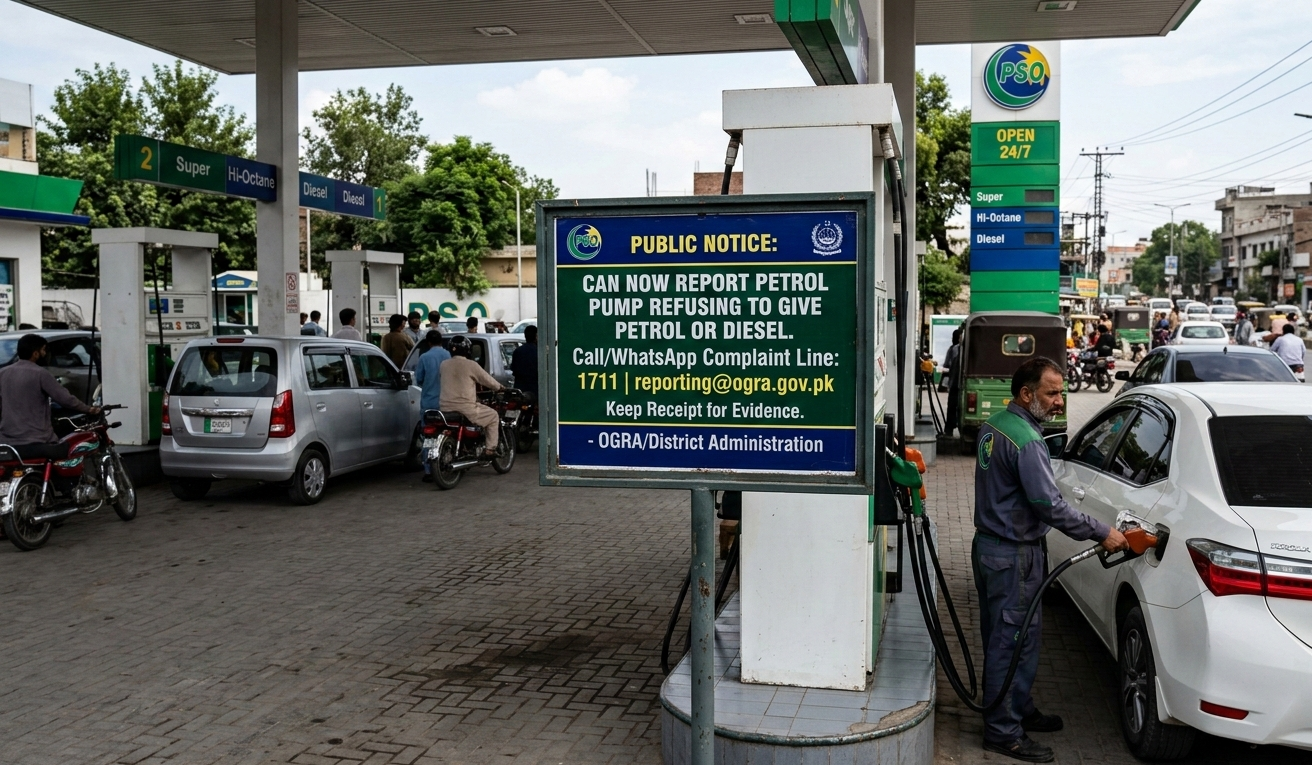
Public can now report petrol pump refusing to give petrol or diesel
ISLAMABAD: The Government of Pakistan has announced a significant increase in fuel prices, urging the public to prepare for the economic impact caused by ongoing uncertainty in the Gulf region. Authorities have raised the prices of petrol and high-speed diesel (HSD) by Rs55 per litre, with the revised rates coming into effect nationwide from Saturday, March 7.
With this adjustment, the new retail price of petrol has been set at Rs321 per litre, while high-speed diesel will now be sold at Rs335 per litre. Officials confirmed that the updated prices were implemented from midnight and will remain applicable across the country for the next seven days.
Why the Government Increased Fuel Prices
Government officials explained that the price hike was driven by a sharp increase in global oil prices along with rising geopolitical tensions in the Gulf region. These developments have significantly affected petroleum imports, increasing shipping, insurance, and supply chain costs.
Since Pakistan depends heavily on imported fuel, changes in international oil markets quickly translate into higher domestic fuel prices. Authorities say the adjustment was necessary to maintain a stable petroleum supply system and prevent disruptions in the country’s fuel availability.
Impact on Households and Transportation
The latest increase in petrol and diesel prices is expected to trigger strong reactions from the public and industry stakeholders. Experts believe that higher fuel prices will directly affect transportation costs and everyday living expenses.
As fuel prices rise, several sectors are likely to feel the impact, including:
- Public and private transportation fares
- Delivery and logistics services
- Prices of food and essential commodities
- Household expenses and overall inflation
Industry analysts warn that this increase could place additional pressure on already strained household budgets.
Concerns About Existing Fuel Stocks
Industry insiders have raised concerns regarding petroleum stocks that were reportedly purchased nearly three weeks ago at lower prices. According to sources, these reserves may now be sold at the newly increased rates.
If this occurs, it could lead to higher profits for suppliers while consumers continue to face the burden of increased fuel costs.
Importance of Petrol and Diesel in the Economy
Fuel plays a crucial role in Pakistan’s economic activity. Petrol is primarily used in private vehicles, motorcycles, and small urban transport systems, making it a key fuel for daily commuting in both urban and rural areas.
Diesel, on the other hand, powers freight trucks, intercity buses, agricultural equipment, and heavy commercial vehicles. Because of its extensive use in logistics and agriculture, any increase in diesel prices can also drive up the cost of transporting goods and food supplies.
Global Oil Market Volatility Remains a Concern
Energy experts have warned that instability in international oil markets may continue to affect domestic fuel prices in the coming weeks. Ongoing geopolitical tensions and supply disruptions could keep petroleum prices under pressure.
If global oil prices remain unstable, further fuel price adjustments may occur, which could increase inflation in essential goods and services across the country.
Dealers Warn of Fuel Supply Problems
Fuel dealers have also expressed serious concerns regarding declining petroleum deliveries. Speaking at a press conference at the Lahore Press Club, Chaudhry Irfan Elahi, Central Secretary General of the dealers’ association, described the situation as alarming.
He stated that diesel supply had dropped to around 20 percent, while petrol deliveries had also decreased significantly.
Elahi added that supply disruptions were already influencing market prices, claiming that diesel costs had increased by around Rs17, while petrol prices had risen by up to Rs35 in certain supply channels.
Petrol Supply Reportedly Reduced by Half
Central Punjab President Nauman Majeed also highlighted issues in the fuel distribution system, stating that petrol supply to filling stations had been reduced by nearly 50 percent.
He alleged that some private companies may be holding back petroleum products, which could create artificial shortages in the market.
Petrol Pump Owners Demand Stable Supply
Meanwhile, Lahore President Jehanzaib Malik called on the government to ensure consistent fuel supply to petrol pumps across the country. He urged authorities to intervene and resolve the issue with oil marketing companies.
Malik said petrol stations require regular deliveries to continue serving customers effectively, adding that some oil marketing companies had reportedly halted supplies to several pumps.
Price Adjustment Valid for Seven Days
Government officials confirmed that the revised petrol and diesel prices will remain in effect for one week, after which authorities will review the situation based on global oil prices and market conditions.
Conclusion
The Rs55 per litre increase in petrol and diesel prices reflects the growing influence of global oil market fluctuations and regional geopolitical tensions on Pakistan’s economy. While the government maintains that the decision was necessary to secure the country’s fuel supply, the hike is expected to increase financial pressure on households, businesses, and transportation sectors.
With global energy markets remaining uncertain, experts believe fuel prices may continue to fluctuate in the coming weeks, making stable supply management and effective regulation more important than ever.



Best VIP experience I have had in a long time. The rewards are generous and the customer support is top notch. Keep it up slotmaxvip2!
Finally found a site that doesn’t lag during the big draws. The interface is clean and the payouts are fast. Definitely my new go-to spot, bdtoto20 is the real deal.
Finally found a site that actually treats players right. Great variety of options and the customer support is top notch. Highly recommend idayam11
If you are looking for a variety of slots, jiliibet is where it’s at. I love how they keep updating the game library. It keeps things fresh and exciting every time I log in.