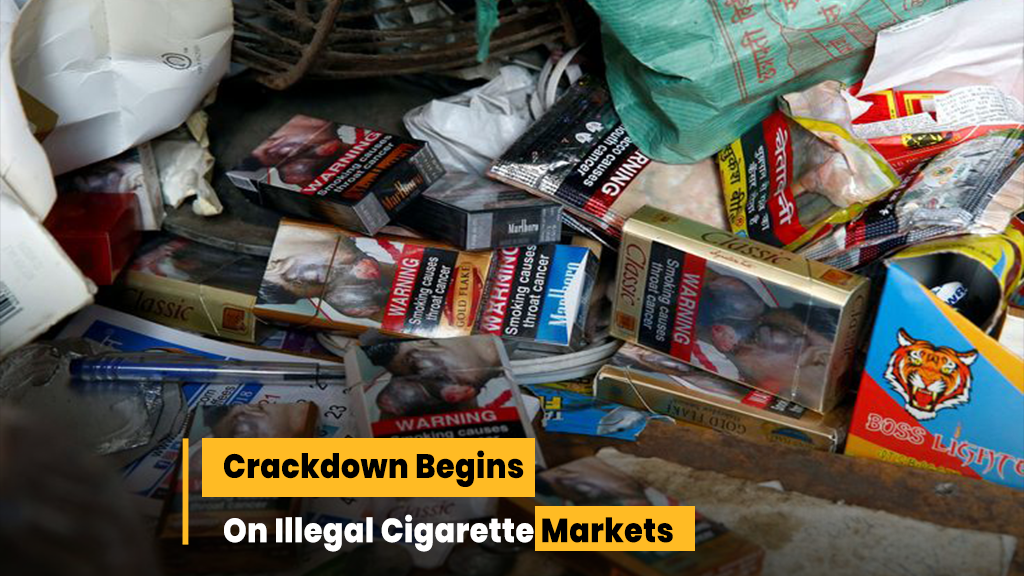
To combat the surging black market for tobacco, Pakistan’s federal and provincial governments have launched a joint nationwide initiative to target the sale of illegal cigarettes.
During the debut of an Oxford Economics research paper on the country’s tobacco trade, State Minister for Finance Bilal Azhar Kayani declared that local authorities would ramp up enforcement to purge untaxed brands from the market. He categorized the illegal trade as a critical issue that must be addressed, noting that the proliferation of these products severely drains national revenue, destabilizes the formal economy, and penalizes compliant taxpayers.
Minister Kayani further noted that several unauthorized manufacturing plants have already been shuttered, and enforcement agencies are continuing to conduct raids on retail shops selling contraband items.
Findings from Oxford Economics
The report, titled “An Economic Assessment of the Illicit Cigarette Market in Pakistan,” highlights a sobering reality: illegal products now represent more than 50% of the country’s total tobacco market.
- Market Scale: Approximately 43.5 billion illegal cigarettes are sold annually, ranking Pakistan as one of the world’s largest hubs for illicit tobacco.
- Shifting Consumption: While total annual consumption has held steady at roughly 80 billion cigarettes for a decade, legal brands are being rapidly replaced by illicit alternatives.
- The Tax Factor: The study points to aggressive tax hikes as a primary catalyst for this trend. Between early 2022 and mid-2023, inflation-adjusted excise taxes surged by 107%. This created a massive price disparity, with illegal cigarettes costing about 36% less than legal ones, prompting consumers to switch to cheaper, untaxed options.
Supply and Distribution
According to Andrew Logan of Oxford Economics, Pakistan’s situation demonstrates the dangers of volatile tax policies and enforcement lapses. The report identifies two main sources of illegal tobacco:
- Domestic Production (64%): Most tax-evaded cigarettes are manufactured within Pakistan’s borders, specifically in Khyber-Pakhtunkhwa and Azad Jammu and Kashmir.
- Smuggling (36%): The remainder enters through porous borders, primarily via Afghanistan, with many brands originating from South Korea and the UAE.
Logan emphasized that without predictable tax policies and rigorous, end-to-end enforcement of the supply chain, criminal networks will continue to thrive at the expense of the state and legitimate enterprises.

Fast access and a great collection of games. I spend a lot of my free time here because it is just so addictive. Check out senopati4login.
Best slot experience I’ve had in a while. The RTP seems decent and the animations are great. Check out bolaslot888 if you’re feeling lucky today.
I’ve been using this app for a few weeks now and the interface is super smooth. Definitely one of the best experiences I’ve had lately. Check out x777eeapp
The app is just seamless. No lags during the big wins which is all I care about. vnd88apkvn is definitely my new favorite for daily gaming.
The VIP treatment here is real. I feel valued as a player and the rewards are generous. If you want a premium experience check out idrpvip4.
I’ve been looking for a stable app like this for a while. The interface is super smooth and the payouts are actually fair. Definitely check out bdze77apk if you want a reliable experience.