
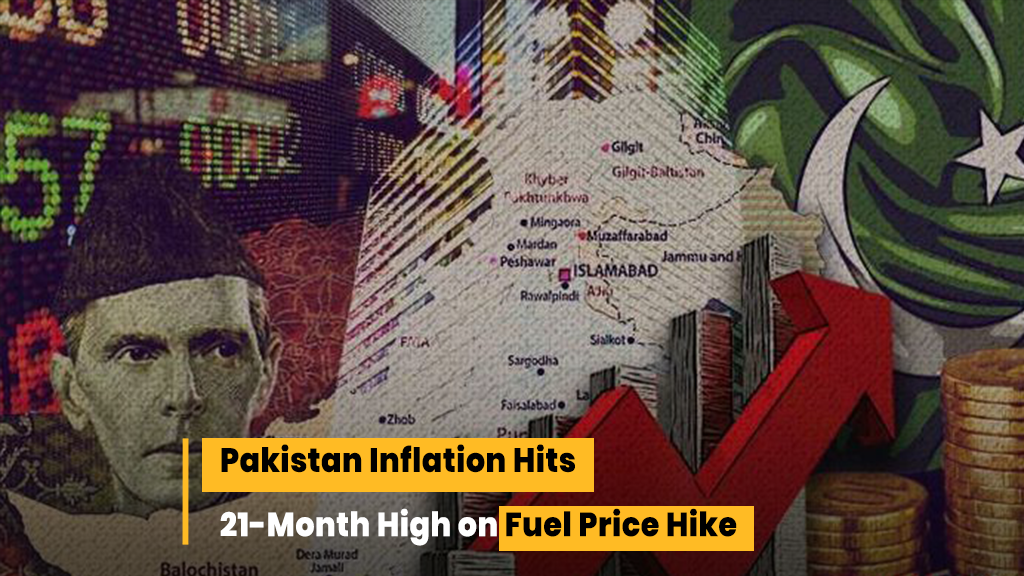
According to a recent report from Topline Securities, Pakistan is bracing for a significant inflationary spike in April 2026. Projections suggest the Consumer Price Index (CPI) will climb to a range of 11% – 11.5% year-on-year, a sharp jump from the 7.3% recorded in March.
This anticipated surge would represent the highest level of price growth in nearly two years, effectively stalling the recent trend of economic cooling.
Key Drivers of the Inflationary Spike
The primary catalyst for this shift is the volatility in the global energy market. Ongoing geopolitical friction in the Middle East involving Iran, Israel, and the U.S. has pushed crude oil prices above $100 per barrel.
This has had a direct impact on domestic costs:
- Fuel Prices: High-speed diesel has plummeted consumer budgets with a 50% increase, while petrol prices rose by approximately 18% this month.
- Transport Sector: The brokerage predicts a 22.5% monthly increase in transportation costs alone.
- Utilities: Rising electricity tariffs and higher costs for liquefied petroleum gas (LPG) are further straining household finances.
Mixed Outlook for Food Prices
While energy costs are soaring, the food sector offers a slight silver lining. Reductions in the price of wheat and fresh fruits are expected to partially balance out the rising costs of poultry and vegetables, preventing an even steeper overall inflation rate.
Economic Implications
- Erosion of Purchasing Power: The “trickle-down” effect of soaring transport and energy costs is significantly reducing the disposable income of households, making basic goods and services less affordable.
- Risk to Real Interest Rates: There are growing concerns among analysts that real interest rates could return to negative territory. This would be the first time this has occurred in over two years, potentially devaluing savings.
- Complex Monetary Policy Challenges: The central bank is facing an increasingly difficult balancing act. Policymakers must weigh the need to control renewed price pressures against the broader requirements of economic stability and interest rate management.
“On a month-on-month basis, April 2026 inflation is estimated to rise by 2.65%,” the report highlighted, noting that the external shocks to oil prices are the dominant factor in reversing the recent disinflationary progress.



Really impressed with the customer support and the overall vibe of the site. Everything feels professional at bd89bat.
This is where the real action is! phluckysabong brings the local energy right to my screen. The odds are fair and the streaming quality is top notch. Love it! phluckysabong