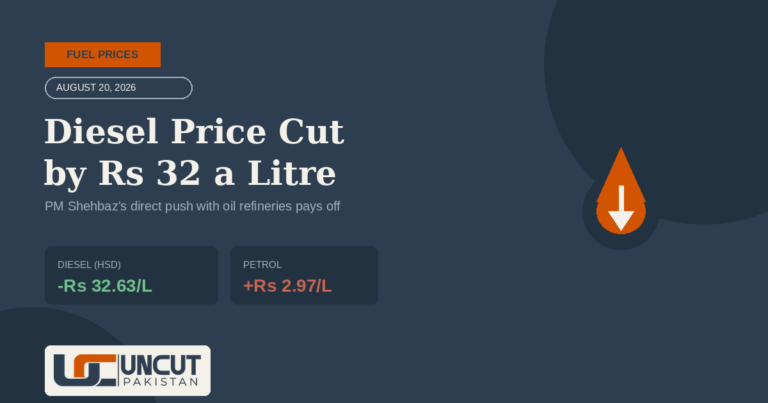
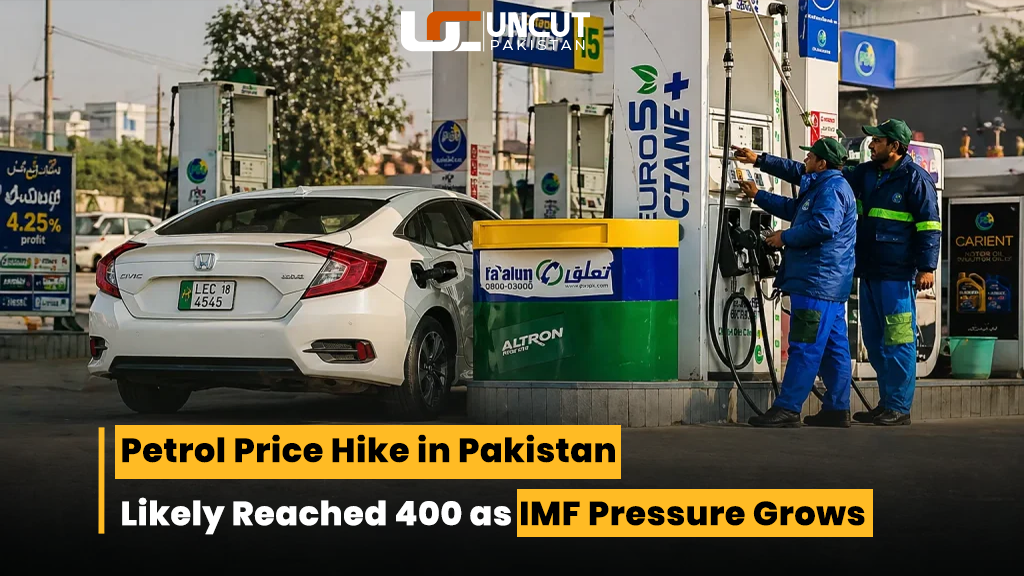
Tough days are deepening for people in Pakistan already struggling with rising costs, as petrol price in Pakistan has reached Rs 399.86 per litre on May 1, 2026. The increase reflects mounting pressure from IMF-backed fiscal policies and continued volatility in global oil markets.
Brent crude is hovering near $115 per barrel, shaping global oil market trends, according to the International Energy Agency. These elevated prices are directly increasing Pakistan’s import bill and translating into higher fuel costs for consumers nationwide.
Government finance officials say revenue from the petroleum levy is already expected to exceed the annual target of Rs 1,468 billion. Insights from the IMF economic outlook on Pakistan by the International Monetary Fund also point toward continued fiscal tightening.
Despite surpassing targets, internal discussions are underway to push the levy even higher. This comes after a recent Rs 27 per litre hike, which pushed the petroleum levy on petrol beyond Rs 107 per litre.
The IMF Factor: A Lender with Conditions
The International Monetary Fund has made its expectations clear: Pakistan must phase out fuel subsidies, rely more heavily on petroleum levies, and demonstrate fiscal discipline ahead of its May 2026 review. Officials confirm the government has committed to maintaining these reforms, leaving limited room to shield citizens from rising fuel prices.
“While global oil prices have shown relative stability, the domestic price hike is being driven by structural demands, not market fluctuations alone.”
Economic Analysts, April 2026
Pakistan’s Finance Minister Muhammad Aurangzeb has been leading negotiations with the IMF in Washington, reinforcing the country’s commitment to reform targets.
A History-Making Hike: April 3 Shock
To understand the current crisis, one must look back at April 3, 2026 when Pakistan witnessed the largest fuel price increase in its history. Petroleum Minister Ali Pervaiz Malik and Finance Minister Muhammad Aurangzeb announced a staggering Rs 137.24 per litre increase, pushing petrol to Rs 458.41 and diesel to Rs 520.35.
Public outrage was immediate. Within 24 hours, Prime Minister Shehbaz Sharif intervened, announcing an emergency Rs 80 per litre cut in the petroleum levy, bringing petrol down to Rs 366.58. However, the move was widely viewed as temporary relief rather than long-term reform.
With IMF pressure ongoing and global crude prices elevated, analysts warn that crossing the Rs 400 mark was inevitable and now that threshold has effectively been reached.
Key Factors Pushing Petrol Prices Up
Global oil prices near $115/barrel due to geopolitical tensions, including impact on Strait of Hormuz shipping routes IMF-mandated increase in Petroleum Development Levy (PDL) as a primary government revenue toolPakistani Rupee depreciation, making imported crude significantly more expensive in local currency Government’s commitment to eliminate energy subsidies under ongoing IMF programme conditions Increased freight and insurance costs on oil imports following regional instability
The Human Cost: Life on the Margins
For Pakistan’s working class, fuel is not a luxury it is essential for survival. Rickshaw drivers, transporters, small businesses, and daily-wage earners are already absorbing the impact of a cumulative 63% increase in petrol prices in recent months.
Higher fuel costs are rapidly feeding into inflation. Transport becomes more expensive, food supply chains become costlier, and basic goods see continuous price increases.
The crisis has also received international coverage of rising fuel prices from BBC News, highlighting the broader economic strain on developing nations.
Economic experts warn that rising fuel taxation will further intensify inflation, placing additional pressure on households already struggling to cope. Small businesses, particularly those dependent on logistics, are facing shrinking margins and uncertain futures.
What Comes Next?
Prime Minister Shehbaz Sharif has acknowledged the difficult balancing act between fiscal stability and public relief. While he has promised that pricing decisions will consider public interest, analysts see limited room for meaningful relief given:
- Elevated Brent crude prices
- Rising petroleum levy pressures
- The upcoming IMF review
“Balancing fiscal stability with citizen welfare remains the critical challenge. The coming months will be defining.”
Policy Analysis, Flare.pk (April 2026)
Pakistan’s petrol price journey from Rs 51.70 in 2007 to nearly Rs 400 in 2026 reflects a deeper structural issue: heavy dependence on imported energy and vulnerability to global market shocks.
As the May 2026 IMF review approaches and oil prices remain high, the real question is no longer whether prices will rise but whether meaningful relief can reach the people before the next surge hits.